Universiis - Ospizio Marino
Grado
How Virtual Reception answers every question before admission at Ospizio Marino di Grado
An RSA and specialist rehabilitation facility redesigned reception workflows thanks to Artificial Intelligence.

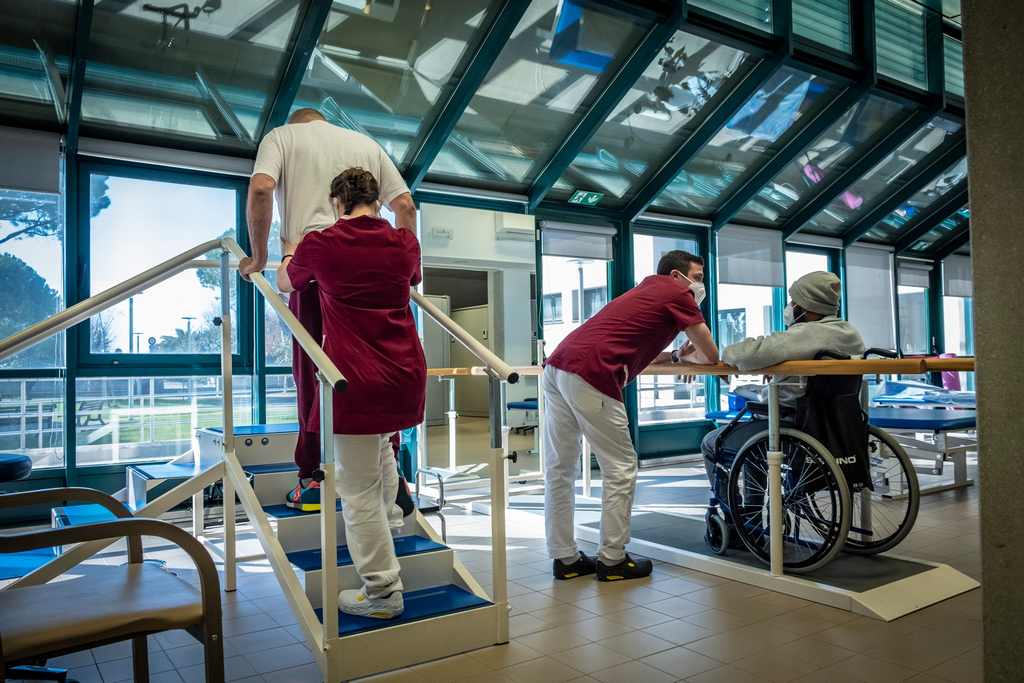
Ospizio Marino di Grado is a private facility accredited with the Giuliano Isontina University Health Authority. It operates on two complementary fronts: residential care (RSA) for people who are not self-sufficient, and specialist rehabilitation for civilian disability beneficiaries under Article 26, who need a rehabilitation pathway as inpatients or outpatients, including specialist visits and physiotherapy.
The challenge: patients who need answers
Anyone contacting Ospizio Marino — whether the patient or a caregiver — is often facing admission to the facility. The admission process is a sensitive moment that requires psychological preparation and complex administrative steps.
- High volume of practical questions about costs, documents, and admission procedures.
- Overloaded switchboard and bottleneck at admissions.
- Time taken away from in-person welcome of new residents and families' more sensitive needs.
This structural limit was bound to persist as long as the phone remained the only contact point tied to rigid hours.
The solution: 3x greater user autonomy thanks to AI
To overcome the switchboard bottleneck and respond promptly to families' needs, Ospizio Marino introduced an AI virtual receptionist for healthcare. The goal was twofold: break down access barriers for users and give internal staff more time by freeing them from repetitive tasks.
24/7 availability and accurate information
Virtual Reception is active at every moment of the day, holidays included, and answers the most common questions about fees, documents, and admission procedures with clarity and precision.
Organized request management
Thanks to tracking of every conversation, staff do not lose information or booking requests and can call patients back directly from the control panel.
Flexibility for changes
The system lets patients change or cancel appointments in real time, reducing phone queues and wait times for patients and caregivers.
Impact on the numbers: exponential growth and autonomy
In the first three months, the digital transition removed the telephone bottleneck and restored autonomy to patients and valuable time to staff.
Managing RSA and rehabilitation means answering countless questions from patients and caregivers before admission — something that was clogging our switchboard. Virtual Reception autonomously handles bookings and information requests: we eliminate telephone bureaucracy and staff can focus on welcoming patients at admissions.
Conclusions and next steps: toward more integrated reception
Success in adopting Virtual Reception is the first step in a digitalization strategy aimed at improving user experience and operational efficiency. Next developments will focus on managing complex requests, supporting users who, after resolving general questions with AI, need in-depth answers about their stay.
This step will refine the synergy between artificial intelligence and human professionalism, giving patients a contact point that is increasingly efficient and personalized.
Want to improve reception at your facility?
Discover how Virtual Reception can reduce switchboard load and provide immediate answers to patients and caregivers.
Book a demo