The AI Paradox: 10 Front Desk Activities With an Increasing Human Touch
Discover how artificial intelligence is redefining the role of healthcare front desk staff, automating repetitive tasks and enhancing high-touch human activities.
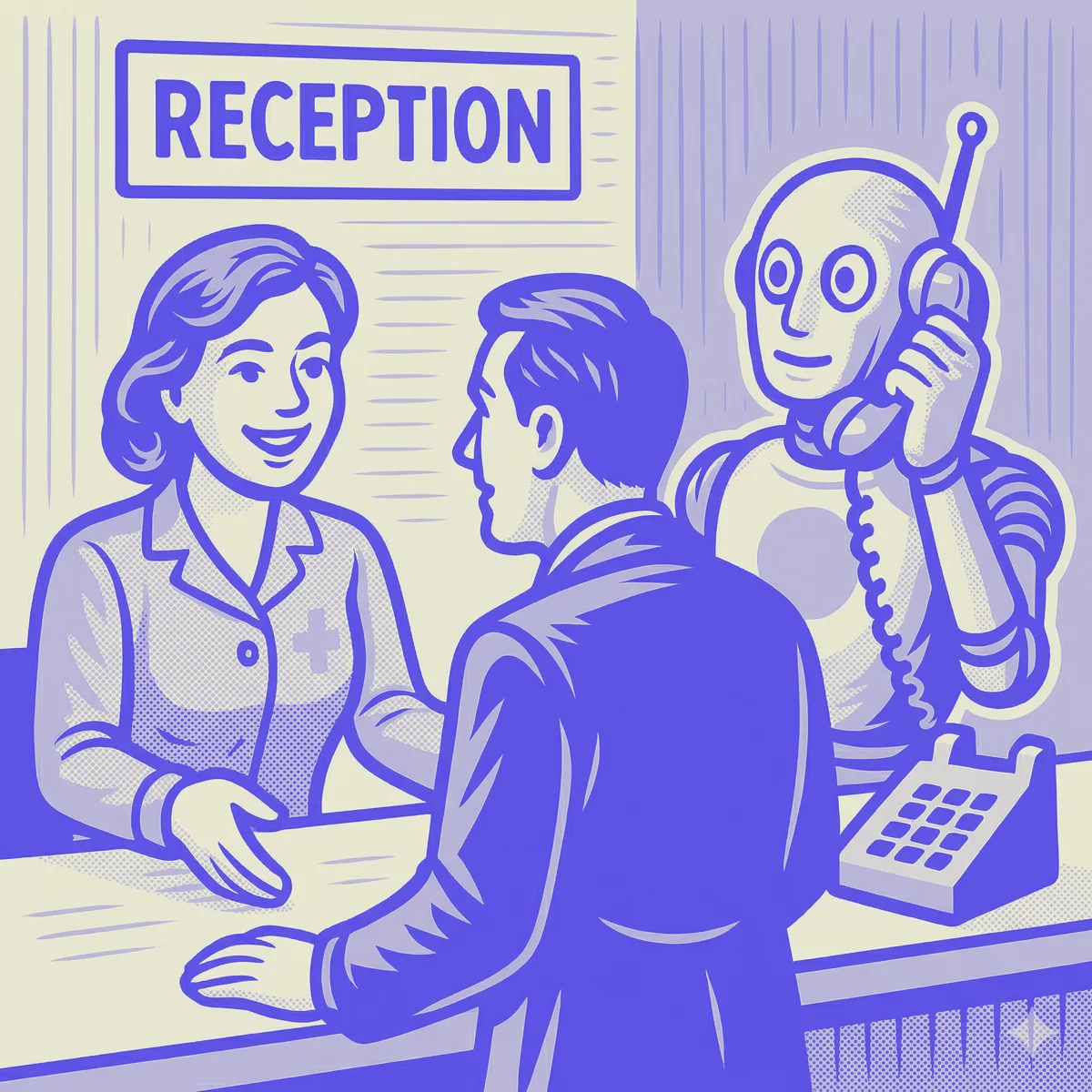
Table of Contents
The Paradox of the Modern Front Desk
Every medical center has its own identity, with tailored protocols and dedicated management systems. Yet there is a common thread shared by nearly all healthcare facilities, from small practices to the most complex multi-specialty clinics: the front desk is the beating heart of operations. When it works effectively, the entire organizational machine runs smoothly. But when the front desk comes under pressure, the entire balance of the medical center falters: unanswered phone calls, patients waiting while the operator is engaged elsewhere, poorly managed bookings, and paperwork piling up.
It's not a matter of staff competence — it's a matter of time. Or rather, the lack of it. What happens is easily predictable: urgencies always win out over strategic priorities. The result? A team under constant stress, patients who perceive haste rather than care, and potential resources that remain untapped. The front desk transforms from a crucial hub into an operational bottleneck.
The paradox is that everyone is aware of it. But today there is a concrete solution: technologies based on artificial intelligence make it possible to radically rethink the distribution of tasks.

The Artificial Intelligence Revolution
Artificial intelligence doesn't replace people — it frees them. It is a tool that enables a complete rethinking of work distribution, allowing staff to focus on what truly creates value: understanding the nuances of each situation, handling exceptions with sensitivity, and building authentic human relationships with patients.
AI takes care of everything that creates volume, repetitiveness, and overload:
Responding simultaneously to multiple people, providing immediate answers to the most frequently asked questions
Managing bookings and changes at any time of day, seven days a week.
Sending personalized confirmation SMS and reminders that drastically reduce no-shows.
Analyzing KPIs to improve performance and enable business intelligence
The result is a front desk that is no longer overwhelmed by administrative burdens, but can finally dedicate itself to what makes the difference: taking care of people.
The 10 High Human-Value Activities
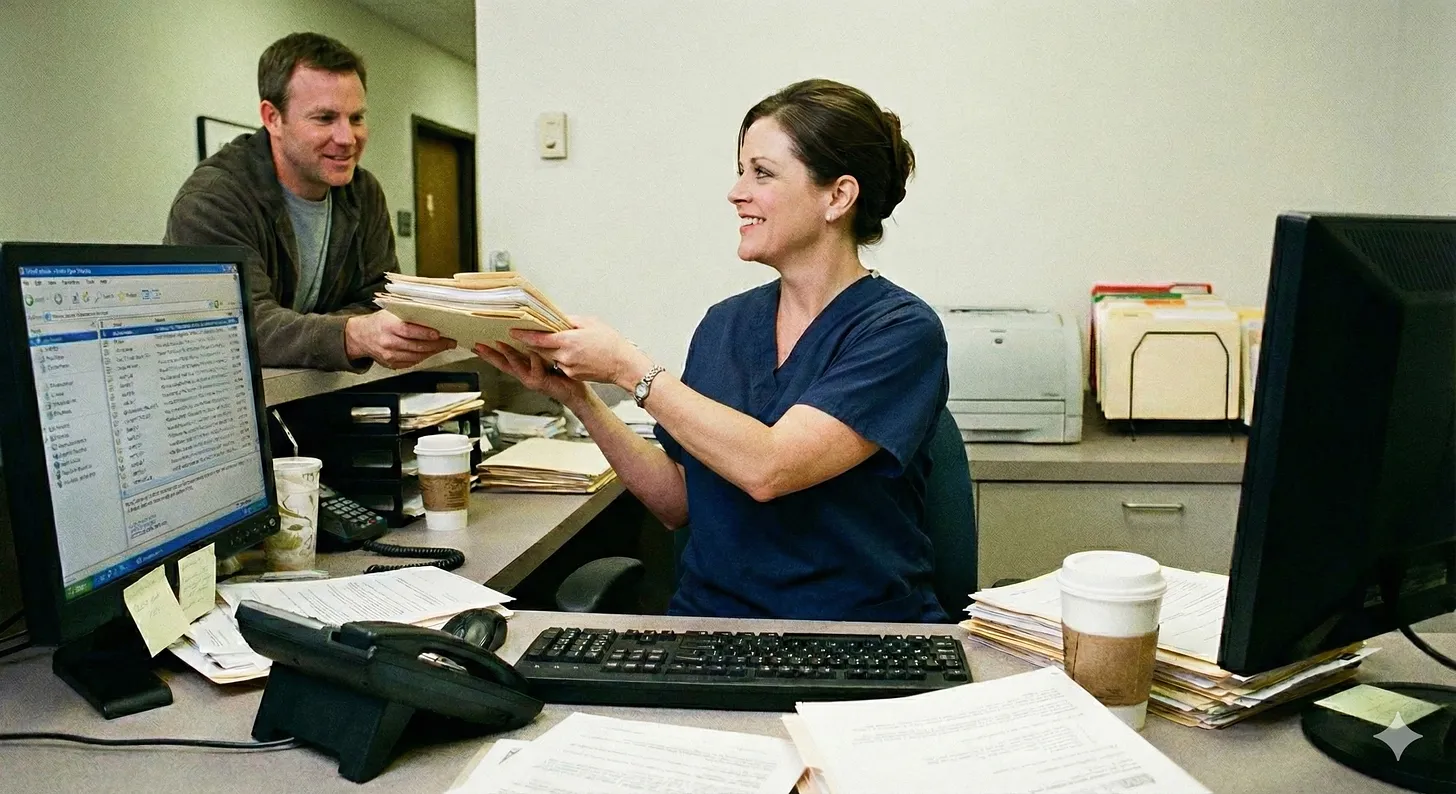
If AI now handles the background noise, automatically answering repetitive questions, here are the highly specific and exceptional activities that operators can return to doing.
1. Managing Exceptions and Priorities
When a doctor flags a clinical urgency while a piece of equipment breaks down simultaneously and numerous appointments need to be rescheduled, you need someone who can assess priorities, negotiate with patients, and find creative solutions. AI handles standard requests, but only the operator can turn an emergency into an opportunity.
2. Coordinating Personalized Care Pathways
Organizing a complete diagnostic pathway in a single day instead of three separate ones requires understanding clinical dependencies, synchronizing rooms and professionals, and calculating reporting turnaround times. It's a logistical puzzle that, when solved well, completely transforms the patient experience and generates lasting satisfaction.
3. Navigating Insurance Bureaucracy
Agreements, coverage limits, prior authorizations: every insurance policy has different rules that are constantly evolving. Correctly interpreting clauses, preparing accurate estimates, and avoiding disputes requires experience and concentration. Centers that excel in this area become the go-to reference for insured patients.
4. Caring for Vulnerable Patients
Elderly patients who struggle with digital systems, people with language barriers, patients who have just received a difficult diagnosis: all deserve attention that goes beyond standard procedures. It takes empathy, patience, the ability to adapt communication, and to pick up on unexpressed discomfort. These are deeply human skills that no technology will ever be able to replicate.
5. Managing Complaints and Retention Strategies
A dissatisfied patient can become a detractor or an even more loyal advocate. The difference lies in the quality of listening, the ability not to become defensive, and the authority to propose concrete solutions. Retention also includes proactive outreach, post-service follow-ups, and personalized thank-you messages — all activities that build lasting relationships.
6. Maintaining Databases and Medical Records
The patient database is a medical center's most valuable asset. Duplicate profiles, outdated data, incomplete consents: every error multiplies, creating cascading inefficiencies. Cleaning and maintaining the database requires judgment, attention to detail, and consistency. When data is accurate, everything works better: fewer errors, effective communications, and accurate analytics.
7. Coordinating Reporting
Synchronizing administrative, laboratory, and diagnostic departments requires a broad overview and strong interpersonal skills. You need to align reporting timelines with follow-up visits, manage clinical priorities, and prevent bottlenecks. When it works well, diagnostic pathways flow smoothly and the internal work environment improves.
8. Building and Curating the Knowledge Base
Operational know-how often resides in the minds of a few "key people." Documenting procedures, training new hires, and updating FAQs — this informational asset reduces dependence on senior staff, accelerates onboarding, and increases the value of the organization. But creating and maintaining this documentation requires dedicated time.
9. Analyzing Performance
First-contact resolution rates, no-show percentages, wait times, patient satisfaction: analyzing data and interpreting the "why" behind the numbers enables evidence-based strategic decisions, identifies emerging problems, and allows for structured improvements. This is an activity that requires concentration and dedicated time.
10. Caring for the In-Person Welcome
The first thirty seconds determine the perception of the entire experience. The difference between a frantic operator on the phone making apologetic gestures and one who greets you with a smile, calls you by name, and personalizes the interaction isn't about technical competence. It's about available time. It's in body language, tone of voice, and the ability to make every patient feel like the center of attention.
The Efficiency of Having an AI Assistant as a Colleague
Thinking of artificial intelligence as a new member of the front desk team radically transforms a medical center's operations. It's not simply about installing an automated answering system, but about pairing human staff with a tireless "digital colleague," active 24/7, capable of taking on the volume of repetitive work that often jams phone lines and generates stress among operators. Among the AI solutions that make this synergy possible, there is Virtual Reception by Run2AI, an AI assistant active 24/7 and specifically designed for the healthcare sector. This "virtual colleague" integrates seamlessly into the technological ecosystem of medical centers, from existing switchboards (VoIP or traditional) to the leading management software in the industry.
The end result is a more efficient and calm organization: the front desk stops chasing the phone and devotes itself to in-office welcoming, knowing that its colleague Virtual Reception, or similar solutions, is handling everything else, in full compliance with privacy regulations and GDPR.
Automation in Service of Healthcare
The real revolution isn't technological — it's cultural. Integrating artificial intelligence — from virtual assistants capable of conversing in natural language, to advanced data analytics tools — means consciously choosing to free yourself from activities that don't require distinctive skills. Those repetitive, fast, predictable, rule-based actions can be delegated to systems designed to execute them endlessly with precision. And this frees up space and time for what truly creates value: human relationships, problem solving, and authentic care.
Intelligent automation doesn't dehumanize work. On the contrary, it is the only way to restore humanity where it truly matters. Let's entrust machines with mechanical tasks and give people back the time to do what no technology will ever be able to do: empathize, innovate, and solve the unexpected.
Related Articles
The Must-Have AI Tools to Manage Your Medical Center in 2026
Discover the most effective artificial intelligence tools to optimize the operational management of your medical center: from document drafting to virtual assistants.
Read more10 KPIs You Need to Know in 2025 for Healthcare Call Centers
A complete guide to the essential Key Performance Indicators for monitoring and optimizing the performance of your healthcare call center.
Read more