The Must-Have AI Tools to Manage Your Medical Center in 2026

Discover the most effective artificial intelligence tools to optimize the operational management of your medical center: from document drafting to virtual assistants.
Table of Contents
If 2025 was the year when Artificial Intelligence quietly entered medical centers as a valuable ally in daily operational management, 2026 marks the real turning point. Today, AI is no longer just a useful support for simplifying tasks — it has become the indispensable tool for those who aim to deliver excellent service and want to build a solid, lasting competitive advantage.
Thanks to this technology, medical centers can now shift from reactive management to a strategic vision, moving from chasing needs to anticipating them, through the many AI tools available today.
This guide analyzes the most intuitive and effective tools for optimizing the operational management of your medical center, from content drafting systems to virtual assistants ready to support front desk staff.
1. Document and Report Drafting
Coordinating a network of clinics requires uniform operational standards and documentation that is always accessible to ensure quality and continuity, avoiding the loss of know-how in case of staff turnover. However, operational knowledge often remains confined to the memory of individual employees or in outdated paper procedures: this fragmentation turns every absence or personnel change into a risk for clinical efficiency, slowing the onboarding of new resources and creating dangerous discrepancies in service levels between locations.
AI assistants like ChatGPT and Gemini radically transform the approach to this problem, acting as true organizational consultants. These tools automate and speed up the generation of operational manuals and standardized procedures, which in this way remain always up-to-date and easily accessible. The generative AI in these tools doesn't just write the texts — it helps you reason, analyze, create reports, and make forecasts. In this way, the medical center's know-how becomes a scalable asset, ensuring that every location in the network operates with the same precision and professionalism.
2. Training and Know-How
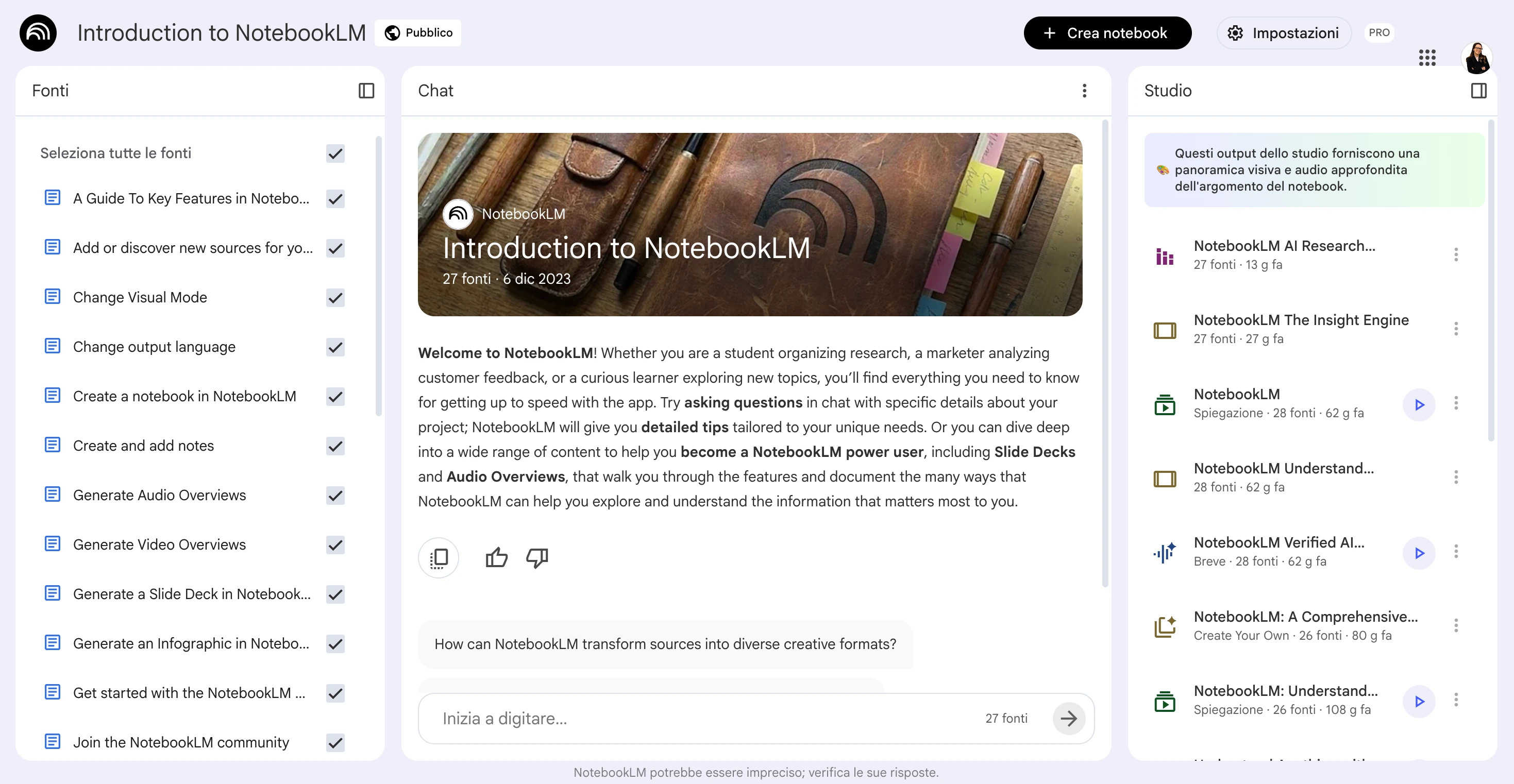
In a medical center, staff turnover can be rapid, making internal training crucial. Thanks to solutions like NotebookLM, it is now possible to convert static documentation — complex protocols and clinical guidelines — into active learning tools. This tool is part of the Google Workspace suite and allows you to transform content formats, such as text, video, or images, into learning systems that facilitate staff training on procedures. For example, NotebookLM can transform complex manuals into:
AI Agents: interactive chats you can ask real-time questions to
Flashcards: question-and-answer card pairs to facilitate information retention
Assessment Quizzes: multiple-choice tests
3. Intelligent Follow-Up
Building a lasting relationship of trust is essential for both the patient's health and the healthcare facility's success. The company behind the ReportAId software strengthens this bond by monitoring, for the first time ever, the patient's journey between diagnosis and treatment. Its AI analyzes, anonymizes, and interprets diagnostic reports to extract valuable information and therapeutic deadlines, generating an intelligent follow-up system. ReportAId extracts key information from reports to generate personalized reminders — via SMS, email, or WhatsApp — to automate the booking of follow-ups or prescribed treatments. Thanks to this system, it is now possible to ensure greater continuity of care for patients, strengthening the relationship over time, while also enabling predictive business management through the numerous insights and statistics on reports generated by the AI.
4. Contact Center and Phone Assistance
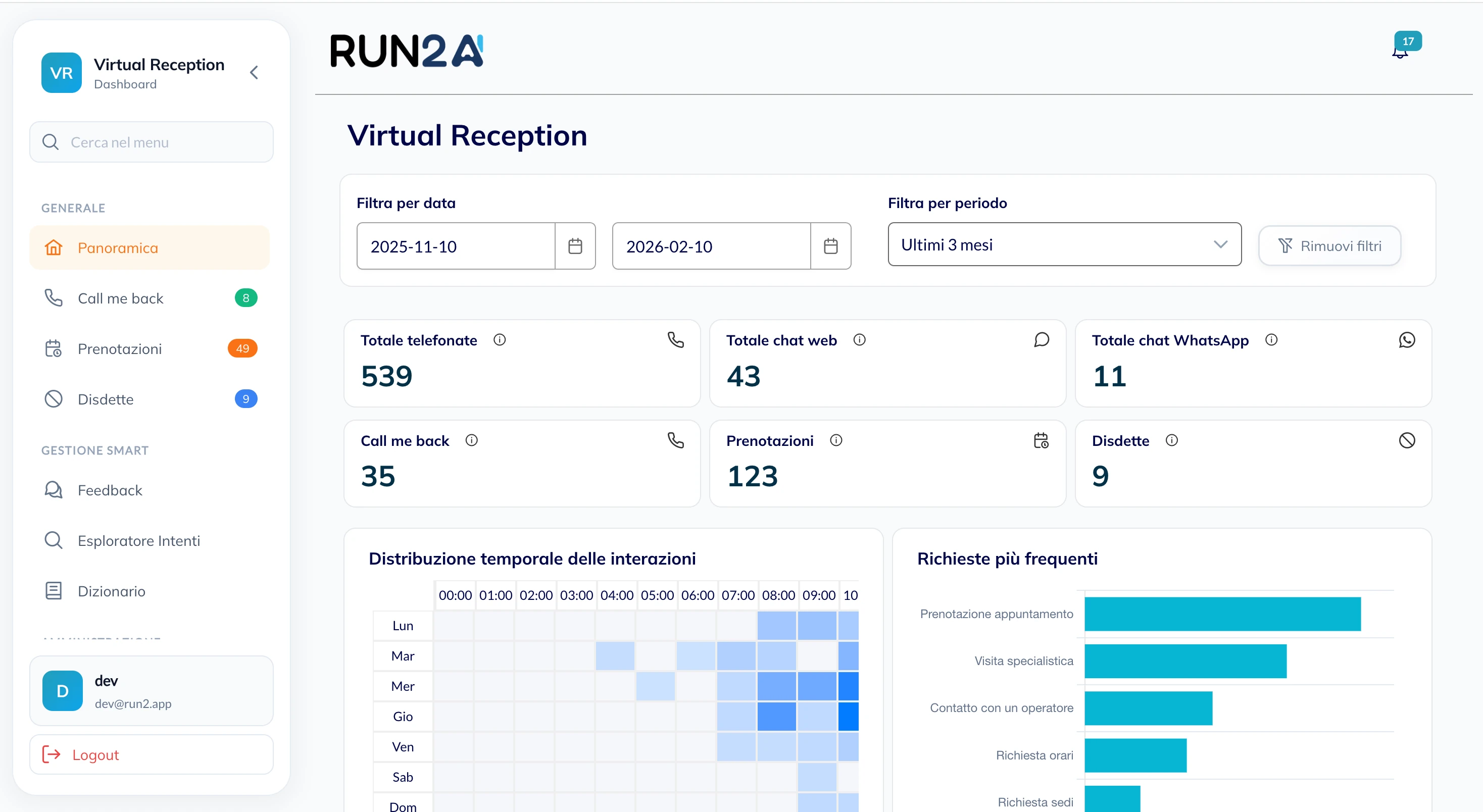
The switchboard is the first point of contact with the patient, but it often becomes the main obstacle. Front desk staff, forced to choose between the phone and in-person reception, operate under a constant overload that generates missed calls, long waits, and the risk of burnout, holding back the facility's growth. Run2AI's Virtual Reception addresses these issues with an intelligent voice assistant trained to operate in the healthcare sector.
Unlike traditional IVR systems or receptionists with recorded messages, Virtual Reception offers a smoother interaction that emulates a phone call with a real person, thanks to conversational AI capable of understanding and generating dialogues autonomously. This technology acts autonomously, answering patient phone calls to the switchboard promptly and 24/7, providing support for FAQs, appointment bookings, or cancellations. A system designed to act directly within the scheduling system through integration with the management software, and to filter the numerous requests that reach the front desk staff, turning missed calls into bookings.
5. Digital / Visual Communication
Physical and digital communication should not be underestimated for a medical center because, when consistent and professional, it can immediately convey a sense of authority and trust to the patient. However, many facilities struggle to maintain a coherent brand identity, producing fragmented materials that risk conveying an impression of disorganization. To overcome this limitation, the center can rely on the generative AI ecosystem of Canva Magic Studio. This technology democratizes professional design, making it instant and intuitive thanks to AI that, with a simple description, generates complete and customized layouts, instantly adapting the same content to dozens of different formats. With a single click, it is possible to ensure that every touchpoint, physical or digital, is coordinated, reassuring, and worthy of the facility's clinical excellence.
6. Human Resources Management
Managing shifts and resources in a medical center is a complex challenge: the unpredictability of peak patient flows and the rigidity of manual planning often lead to operational bottlenecks, with the risk of being understaffed during critical moments, compromising the quality of care and increasing staff burnout. The center's organization is ensured by artificial intelligence applied to personnel management through Factorial. This HR management software uses advanced predictive algorithms to analyze historical data and seasonal trends, accurately anticipating patient flows to suggest optimal shift scheduling for medical and administrative staff. This ensures an excellent level of care even during peak pressure, while also automating intelligent monitoring of critical deadlines and regulatory compliance.
7. Healthcare Compliance
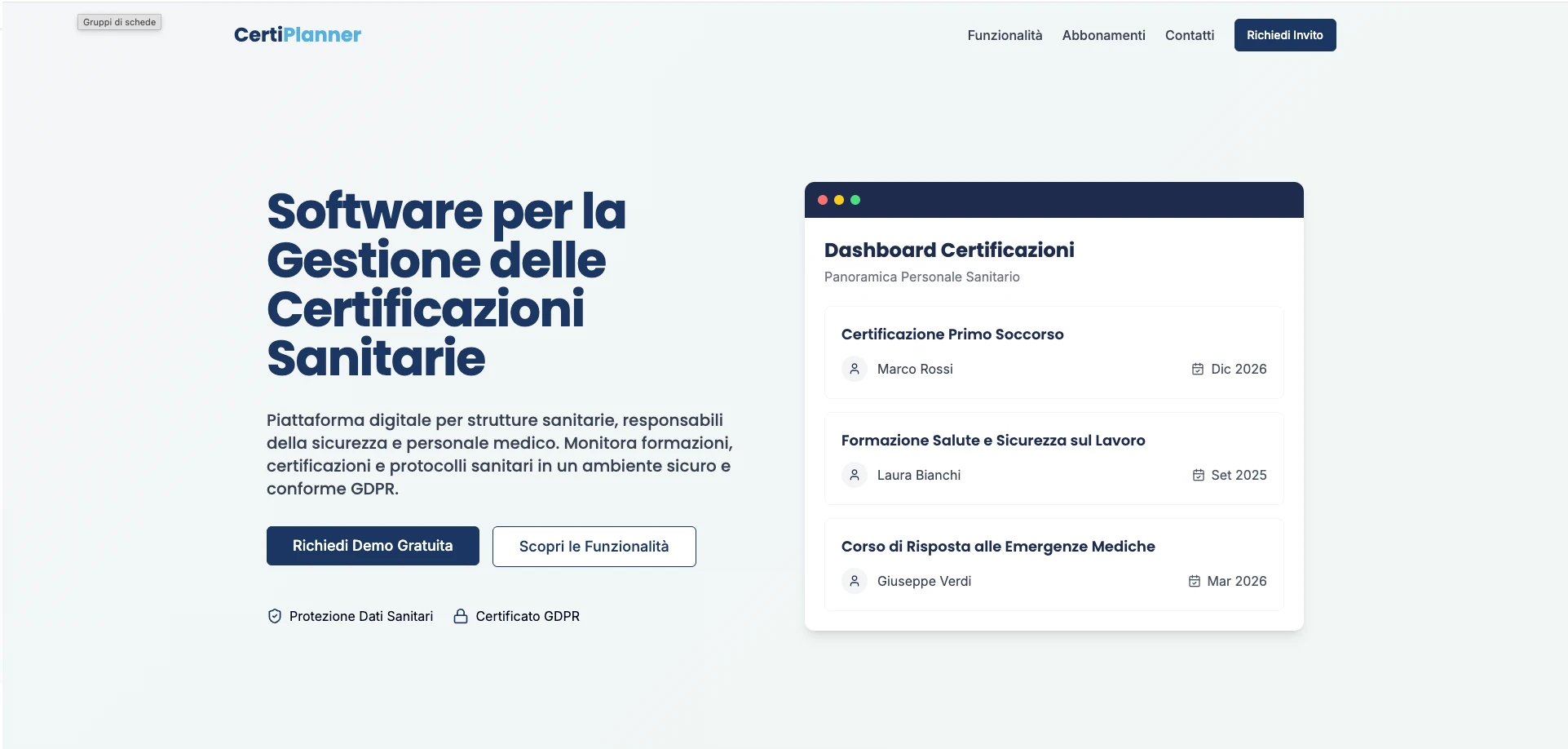
Managing regulatory compliance in a healthcare facility is a minefield of silent deadlines: equipment certifications, medical device calibrations, staff credentials, and fire safety deadlines represent an enormous bureaucratic burden. The risk of oversights is not just administrative but legal and operational, as an expired certification can lead to the suspension of activities or severe penalties, jeopardizing patient safety and business continuity. To address this challenge, the facility can rely on Certiplanner, an AI solution designed to centralize and automate compliance monitoring, thanks to a system of predictive alerts and an intuitive dashboard that automatically notifies the approach of every critical deadline, allowing management to act preventively.
8. Workflow Automation
Running a medical center is often slowed by fragmented software and scattered documents that force management through exhausting manual work, jumping from one system to another—wasting valuable time and increasing the risk of oversights. The answer is Zapier, a powerful connector that lets anyone build simple automations between systems, eliminating the manual steps that lead to tracking errors. Here are some workflows you can automate:
Spreadsheet updates: Whenever a patient enters their details in an online form, Zapier instantly updates your central database, so you no longer need to transcribe information by hand.
Preset emails and notifications: The system detects an appointment booking and automatically sends confirmations, preparatory instructions, or personalized reminders by email or SMS to reduce no-shows.
Smart document filing: At the end of a service, Zapier can automatically generate and save documents—such as privacy consent—in dedicated cloud folders (for example Google Drive or Dropbox).
9. Website Builder – Wix AI
Managing a medical center’s digital presence often means dealing with a frustrating reality: every website update requires long technical lead times, specialists who are hard to find, and consulting costs that add up even for minor changes. The result is management stuck with outdated platforms, unable to react with agility to market or patient needs.
The answer to this limitation is the Wix AI platform: an intelligent, intuitive website builder that lets even people without programming skills build and update a website entirely on their own. With a simple text prompt, Wix AI can generate a unique, tailored site from scratch in minutes: describe your practice, the services you offer, and the style you want to get a complete, coherent structure ready to use. The generated site is not a generic template, but a starting point you can customize in every detail—without writing a single line of code!
Conclusion
Artificial Intelligence today is no longer a novelty of the future, but the concrete tool for making a medical center solid and able to stand out from the rest. Thanks to automation, the repetitive tasks that used to consume precious hours are now managed smoothly, enabling the facility to be much faster and more efficient in its responses. Having a back-office powered by AI means simplifying everyone's work and allowing staff to focus on their core activity: dedicating real time and quality care to people.
Related Articles
6 Common Horror Stories in a Healthcare Reception

Explore the most critical and common situations that occur at healthcare receptions and discover how to prevent them through innovative solutions.
Read more5 Questions for Andrea, the New CEO of Run2AI

Discover the journey and vision of Andrea, the new CEO of Run2AI, through 5 key questions about the future of AI in healthcare and technological innovation.
Read more