6 Common Horror Stories in a Healthcare Reception
Explore the most critical and common situations that occur in healthcare receptions and discover how to prevent them through innovative solutions.
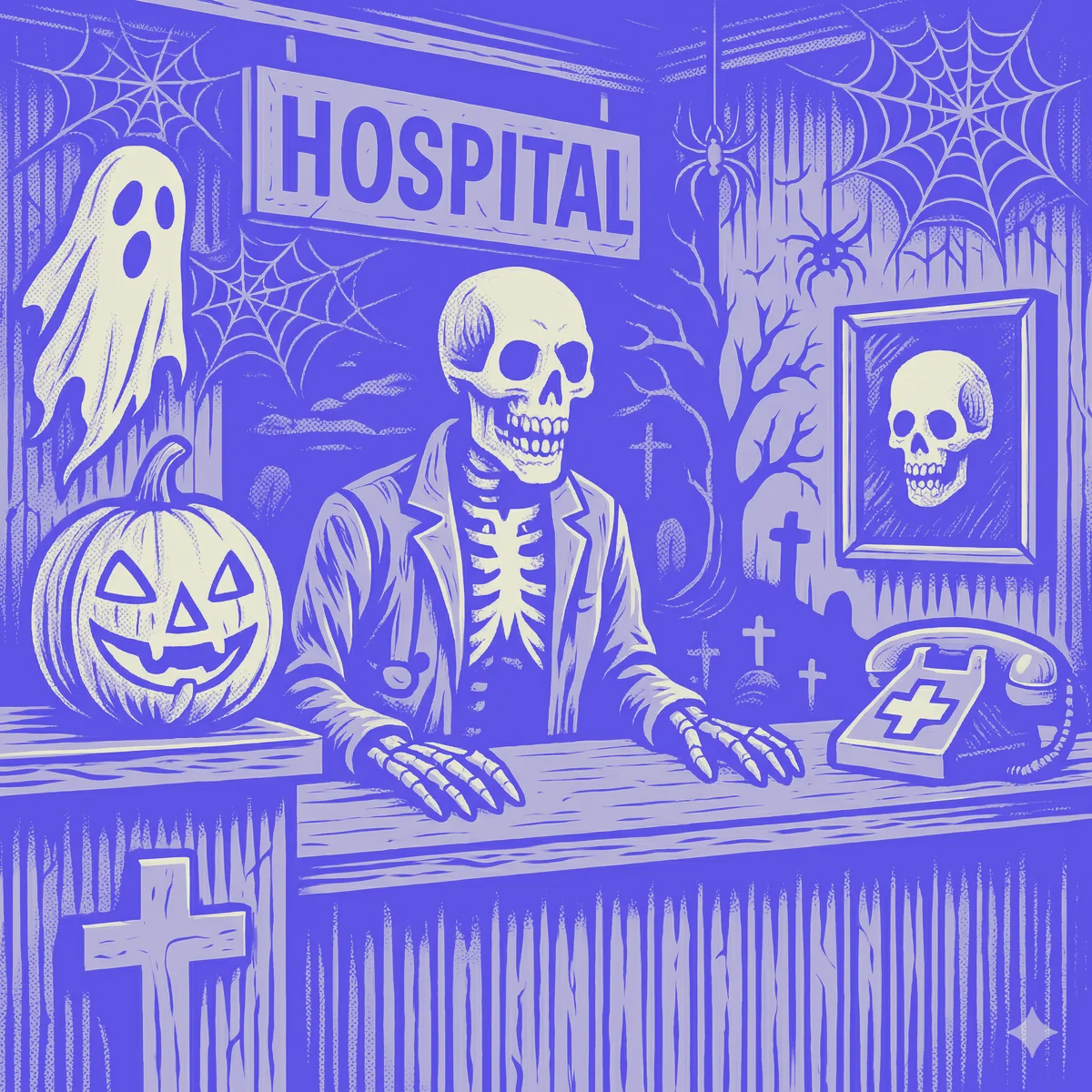
Table of Contents
The reception of a healthcare facility is the first point of contact for patients, as well as the organizational heart of a medical center. Yet, all too often, this is precisely where nightmarish service failures occur that compromise patient satisfaction, operational efficiency, and even financial results. Below, we review nine "horror stories" — unfortunately common situations — that every medical center should avoid.
1. The Phone That Rings Unanswered
One of the most frequent problems is missed incoming calls. In many medical centers, front desk staff, while managing long queues of in-person patients, deliberately ignore the phone. In some cases, the switchboard is even set to silent mode or temporarily disabled to avoid further distractions while clearing the check-in queue. But the flip side of the unanswered phone is the patients who call and get no response. This behavior is confirmed by official complaints: a report from the Tor Vergata Polyclinic in Rome shows that about 27% of complaints regarding "communication" concern the lack of telephone availability (disconnected numbers, busy lines, phones that no one answers). In essence, nearly a third of communication-related complaints point to phones that are deliberately silenced or perpetually busy.
2. The Doctor-Receptionist Paradox
A side effect of reception inefficiency is that sometimes doctors and other healthcare professionals end up personally handling appointment bookings. In some facilities, faced with patient complaints about "not being able to reach the switchboard," the healthcare staff themselves take charge of appointment schedules, effectively bypassing the front desk. These workarounds stem from the staff's good intentions to prevent patients from giving up on care because of unanswered phones. However, they are indicators of poor organization that burdens healthcare professionals with administrative tasks, with the risk that scheduling information may be lost or miscommunicated. This can happen when the switchboard is not integrated with the booking software, and healthcare staff often resort to WhatsApp or other DIY solutions to manage patient requests.
3. Appointments Diverted to Competitors
An even more concerning aspect is when reception inefficiency leads patients to seek other facilities for exams or follow-up visits. Imagine a case where a patient has received a prescription from the center's doctor for an MRI or CT scan: if they can't book the exam because they can't reach anyone, they will likely look for an alternative. About 9 out of 10 patients, if they find the phone busy or can't book immediately, turn to another facility rather than postpone further. This is a serious service failure: continuity of care and trust are both affected.
4. Negative Reviews and Constant Complaints
It's no surprise that the difficulty in reaching medical centers by phone is one of the main reasons for patient dissatisfaction. Just read the online reviews of many clinics or social media comments: recurring phrases like "Nobody ever answers the phone" or "The line is always busy, impossible to book" appear frequently. Many exasperated patients leave negative feedback not so much about the quality of care received, but rather about the access barrier represented by the phone reception. This volume of critical reviews damages the reputation of healthcare facilities in the eyes of the public.
5. Endless Phone Calls That Block the Line
Looking deeper into the causes of missed calls, we discover an operational aspect that is often overlooked: a single phone call can occupy the operator for a long time, causing "unanswered calls" to pile up. An on-the-ground analysis describes how this happens when it's difficult to establish priorities and phone lines are limited. This is especially true with elderly callers who rely entirely on telephone contact and require detailed explanations, leading many operators to "mute" other lines temporarily, or simply not answer, until they have finished the current call. This is a practice that staff adopt to avoid interrupting a sensitive conversation, but it inevitably causes a chain of missed calls.
6. Reception Staff at Breaking Point
All the points discussed so far converge toward a central problem: the excessive workload on healthcare receptions. In some facilities, the volumes to manage are simply unsustainable for the available staff, who cannot physically handle both the in-person flow and the dozens of phone calls. The result is that the reception becomes a bottleneck where impatient patients accumulate on-site and dissatisfied patients wait on the other end of the line. Furthermore, this continuous pressure on reception staff inevitably leads to stress and burnout.
International studies report that receptionists and switchboard operators in healthcare have among the highest exhaustion and turnover rates, around 20% annually — in practice, 1 in 5 leaves their position every year. This stress not only generates poor service for patients, but even poor treatment of the staff members themselves.
Conclusions
The scenes described should not belong to a well-organized medical center. Unfortunately, they represent a fairly common reality, the result of structural and organizational shortcomings. Making these "recurring episodes" visible is the first step to correcting them, because improvement is possible. How? By adopting modern switchboards, monitoring missed calls, calling patients back, digitizing bookings, and supporting front-office staff with adequate resources like the Virtual Reception — an AI agent that answers incoming calls 24/7 to provide timely responses to patients.
Indeed, delivering a patient-centered healthcare service requires a customer service that is always ready to respond, queues that are managed without excessive wait times, and staff that are not left alone under impossible workloads. Eliminating, or at least drastically reducing, the episodes described means taking a huge step forward toward a better care experience for patients and more humane working conditions for those who welcome them. In other words, it means bringing efficiency, courtesy, and organization to the reception, instead of living in a state of "permanent emergency" that today seems to have become the norm.
Related Articles
The Must-Have AI Tools to Manage Your Medical Center in 2026
Discover the most effective artificial intelligence tools to optimize the operational management of your medical center: from document drafting to virtual assistants.
Read more5 Questions for Andrea, the New CEO of Run2AI
Discover the journey and vision of Andrea, the new CEO of Run2AI, through 5 key questions about the future of AI in healthcare and technological innovation.
Read more