4 Examples of Artificial Empathy in AI Assistants
Explore how chatbots and voicebots can simulate empathy in customer service, with real-world examples in healthcare, banking, hospitality, and HR.
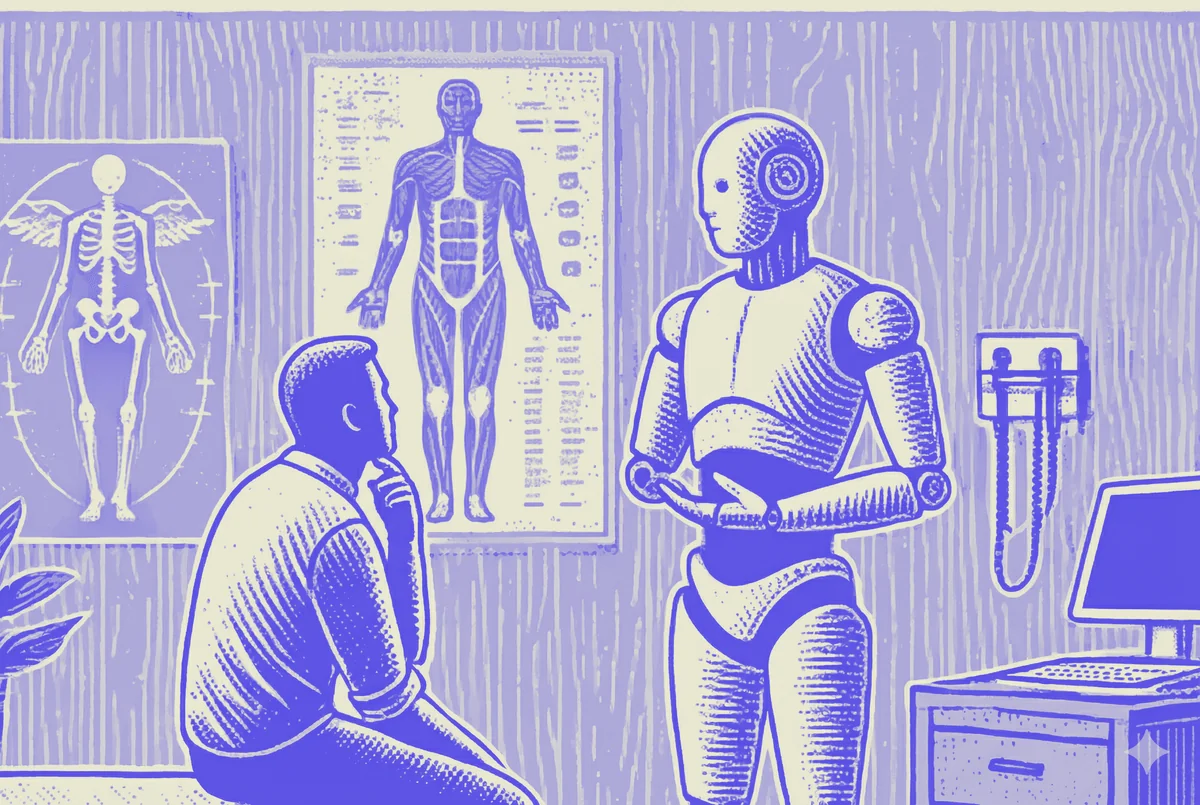
Table of Contents
Chatbots and Voicebots: The Polite Future of Customer Service
We are accustomed to thinking that only a human being can truly understand and empathize with another person. A bot, by definition, does not feel emotions. Yet, thanks to sophisticated natural language processing algorithms and careful programming, virtual assistants can simulate strong empathy through expressions of understanding, friendly tones, and — above all — infinite patience.
According to the recent "CX Trends Report 2024" by Zendesk, nearly half of customers believe that even AI agents can be empathetic when solving their problems. Of course, an AI's empathy is designed by intention: phrases like "I'm sorry you're experiencing this issue" are scripts crafted by conversational designers. Yet, for the user what matters is the result: having someone (or something) on the other end that doesn't lose its composure, doesn't treat them condescendingly, and doesn't abandon them, always maintaining a polite and "professional" tone.
According to the report, 51% of consumers say they prefer interacting with a bot rather than a human agent when they need immediate service without waiting in a queue. And for simple queries, the percentage rises to 74% of users because this method is considered faster and more efficient.
In traditional customer service, the wait is often excruciating and the outcome uncertain. A chatbot or voicebot eliminates both problems: it responds immediately and does so calmly and courteously, even when the customer is frustrated. Bots are unbeatable in this regard: active 24 hours a day, 7 days a week, with no rest shifts or answering machines — always present and patient. But in practice, how does this type of tool perform in typical interactions?
1. The Doctor's Assistant
The healthcare sector offers perhaps the most surprising example of this trend: can artificial intelligence actually come across as more empathetic than a doctor?
Apparently so, according to an analysis published in the prestigious JAMA Internal Medicine, which had humans provide a "blind" evaluation of responses given by both physicians and ChatGPT to 195 medical questions collected from Reddit.
The AI's responses were preferred over those of doctors in 79% of cases. Moreover, the quality of ChatGPT's responses was rated as good or excellent 79% of the time, compared to just 22% for human responses, and most notably 45% of the chatbot's responses were rated as "empathetic" or "very empathetic", compared to just 5% for those of physicians. In other words, on nearly every parameter — completeness, perceived accuracy, and courtesy — the bot outperformed the healthcare professional.
Naturally, a chatbot can never fully replace the genuine empathy and expertise of a flesh-and-blood doctor or psychologist, but these findings suggest that there is real value in the simulated kindness of bots in healthcare. Above all, a significant difference in the quality of responses can be observed: often the bot adopts a caring and detailed tone, while the doctor takes a brief and clinical approach. However, for a worried patient, a comprehensive response that acknowledges their concerns is more "reassuring" ("I understand your concern, that can be scary…"), and in situations where the human factor is scarce — overworked doctors, overwhelmed support lines, rigid office hours — a well-designed virtual assistant can make the difference between a frightened patient left alone and one partially reassured by immediate, courteous responses.
2. The Banking Advisor
Banking is a field where the combination of courtesy and responsiveness of bots stands out particularly well. Consider the virtual assistant Erica from Bank of America, launched in 2018 — within a few years it has grown to handle millions of customer requests every day, providing account information, transfer assistance, and basic financial advice to over 98% of customers in under a minute (average: 44 seconds). A record time that would be impossible to guarantee even for the most efficient human operator, especially at scale.
3. Your Hotel Concierge
In the travel and hospitality sector as well, bots are winning over customer chat channels. If a tourist needs check-in information for a hotel in the middle of the night, or needs to make a last-minute booking change, they no longer have to wait for business hours — they can resolve their issue thanks to a virtual assistant. According to an analysis from the Q2 2023 earnings call by Booking.com, 38% of travelers prefer interacting with a virtual assistant over other channels precisely because of the speed and efficiency it offers, which translates into a smoother and more pleasant experience. In fact, 57% of tourists believe that chatbots significantly improve the travel experience, providing personalized information and useful advice at just the right time.
Booking.com, Airbnb and Delta Airlines, for example, have invested heavily in AI and automation to manage the enormous volume of customer requests during peak seasons. Thanks to advanced chatbots, they now handle nearly a third of all requests (from booking information to schedule updates) without human intervention, with a level of accuracy that satisfies 8 out of 10 users.
4. Your Company's HR Manager
Within companies as well, chatbots are finding fertile ground, paradoxically proving to be less cold than some HR departments. Think of the frequent questions an employee might have: How many vacation days do I have left? What's the procedure for requesting time off? Or doubts about payslips, benefits, and internal policies. A chatbot always responds, provides details without judgment, anonymously and immediately.
For example, IBM has developed internal AI assistants to support staff with administrative requests and training, and several multinational companies use them for onboarding new hires (explaining procedures, forms to fill out, etc.) and for daily support. The flexibility of 24/7 availability proves useful here too, helping to create an environment where information flows more freely and stress is reduced.

How Bots Overcome Psychological Barriers
It may seem absurd to confide in a machine, but for some users it is actually easier to open up knowing there isn't a human on the other end who might judge them. Preliminary studies published on PubMed Central indicate that "Bots don't make anyone feel rejected", thanks to the anonymity and confidentiality they guarantee. An AI assistant will never raise an eyebrow at our admissions, will never show impatience or disapproval, won't get irritated if we ask the same question for the third time, nor show signs of weariness at the hundredth call of the day.
These are all social advantages that reduce the perceived stigma of asking for help or asking questions, which can often generate embarrassment or fear of judgment — especially when it comes to sensitive questions about one's health. For example, during the pandemic, many people used therapist chatbots or symptom checkers like WoebotHealth to assess their health status, appreciating the ability to do so anonymously and without feeling judged.
Conclusions
We are facing what is only an apparent paradox: we build machines to interact with humans, and these machines end up treating us more politely than humans themselves. In many cases, we prefer interacting with a bot because it eliminates some of the "rough edges" typical of human interactions: no dead time, no rudeness, zero embarrassment or prejudice. The bot is always there, ready to help, and it does so with an invariably accommodating tone.
Of course, this doesn't diminish the irreplaceable value of people in helping or service relationships. Rather, it points to a path toward human-machine collaboration where the efficiency and programmed kindness of AI combine with human emotional intelligence and experience. Bots can take on the repetitive, stressful work of handling the thousands of small daily requests and leave humans the task of stepping in where genuine empathy and creativity are needed.
In the meantime, however, there is something for us to learn as well: the courtesy and availability we rightly expect from machines should also be cultivated in our everyday human relationships.
Related Articles
The Must-Have AI Tools to Manage Your Medical Center in 2026
Discover the most effective artificial intelligence tools to optimize the operational management of your medical center: from document drafting to virtual assistants.
Read moreThe AI Paradox: 10 Front Desk Activities With an Increasing Human Touch
Discover how artificial intelligence is redefining the role of healthcare front desks, automating repetitive tasks and enhancing high-touch human activities.
Read more