The Voice Revolution: Voicebot Alternatives to GAIA

Discover how voicebots are transforming Italian healthcare, offering efficient and accessible solutions for call management and patient interaction.
Table of Contents
Voicebot Technology for Healthcare
A voicebot is a conversational Artificial Intelligence software capable of interacting vocally with people through natural language processing (NLP), simulating a real human conversation. This technology can independently understand requests and provide immediate verbal responses, reducing wait times and ensuring a service that is always available and efficient.
While at a general level two-thirds of the Italian population is under 50, in the Healthcare Sector the picture is reversed: approximately 75% of patients are over 50. This means that a large share of healthcare users have limited digital literacy. According to ISTAT, only 68.1% of people aged 65–74 possess basic digital skills, a percentage that drops to 31.4% among those over 75.
For this reason, in healthcare it becomes essential to adopt solutions that are accessible even to people who are not comfortable with digital technologies, use outdated devices, or are accustomed to interacting primarily through traditional phone calls rather than online services. In this scenario, voicebots represent a strategic ally for healthcare facilities: they replace tedious answering machines and endless waits with background music, seamlessly fitting into the normal call flow without changing its dynamics.

The Benefits of Voicebots for Healthcare Facilities
Adopting a voicebot in healthcare brings benefits to both facilities and patients, including:
Continuous availability and zero wait times – A voicebot is active 24/7, handles multiple calls simultaneously, and reduces the risk of losing patients or receiving negative reviews on Google or Facebook due to busy lines or closed front desks.
Automation of repetitive tasks – Bookings, appointment rescheduling, FAQs, and data collection can be handled autonomously by AI, freeing up staff time for more complex tasks such as patient intake, booking modifications, and national health service bookings (which are often not fully integratable due to the lack of regional health authority APIs).
Optimized schedules – Automatic reminders reduce no-shows and scheduling gaps
Improved patient experience – Immediate and accurate responses eliminate waits and transfers between departments, making the interaction smoother and more reassuring, as well as "infinitely patient."
Efficiency and cost savings – Automating the phone front-office reduces costs, lightens workloads, and allows staff to be assigned to higher-value tasks.
In summary, voicebots make it possible to offer a faster, more inclusive, and more efficient healthcare phone service, integrating with existing management software and providing useful data for management to monitor and optimize performance.

Voicebots Available in Italy
In recent years, several voicebot solutions targeting the healthcare sector and beyond have emerged, offered by both innovative startups and established companies in the contact center and conversational AI space. Here are some of the main solutions active on the Italian market:
1. GAIA by Esosphera (Covisian Group)
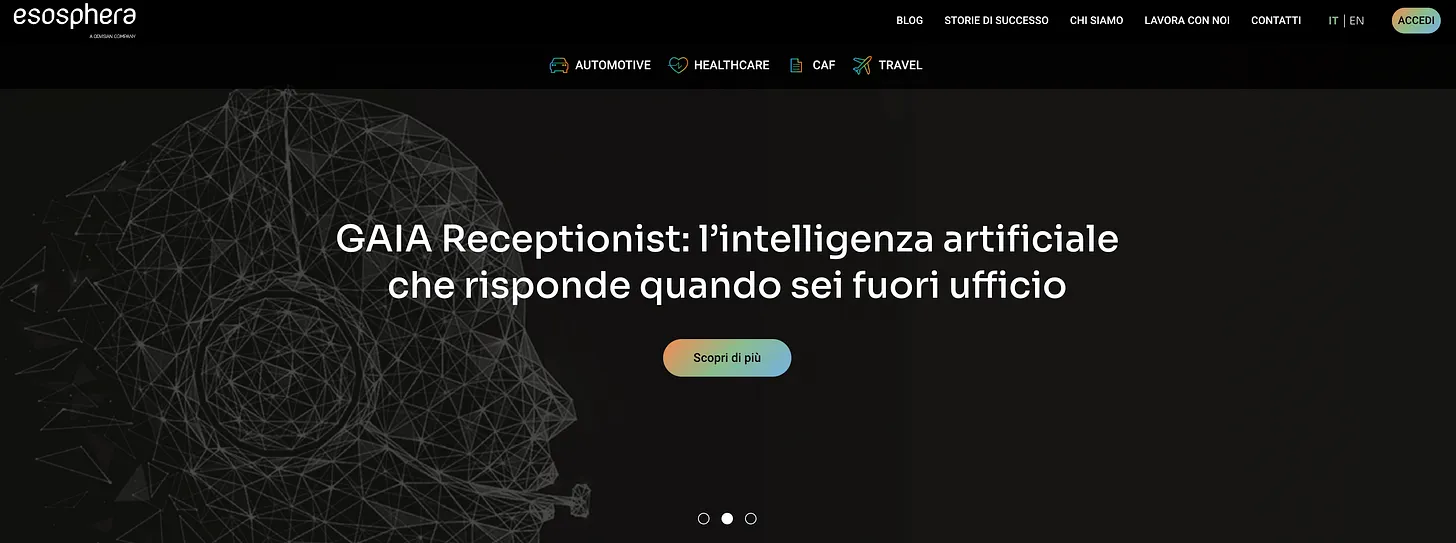
GAIA is a voicebot/chatbot developed by Esosphera, a company specializing in conversational artificial intelligence, capable of autonomously handling incoming requests and integrating with major CRMs and channels (phone, SMS, WhatsApp, social media). GAIA operates across multiple sectors, including automotive, retail, tax assistance (e.g., CAF), healthcare, logistics, public administration, and tourism.
2. Virtual Reception by Run2AI
Virtual Reception by Run2AI is the first digital receptionist custom-built for the healthcare industry. It was born from Run2AI's direct experience in the healthcare sector and is designed to meet the specific needs of medical centers. Thanks to its dedicated training, Virtual Reception can understand the terminology and taxonomy typical of medical-healthcare language. It integrates easily with the main management tools used by healthcare facilities – such as Vettore Medical, AlfaDocs, and GipoNext – ensuring rapid implementation without interrupting workflows. Equipped with an intuitive dashboard, it allows monitoring conversations and customizing voicebot content in real time, making the experience flexible and always up to date.
3. Indigo AI
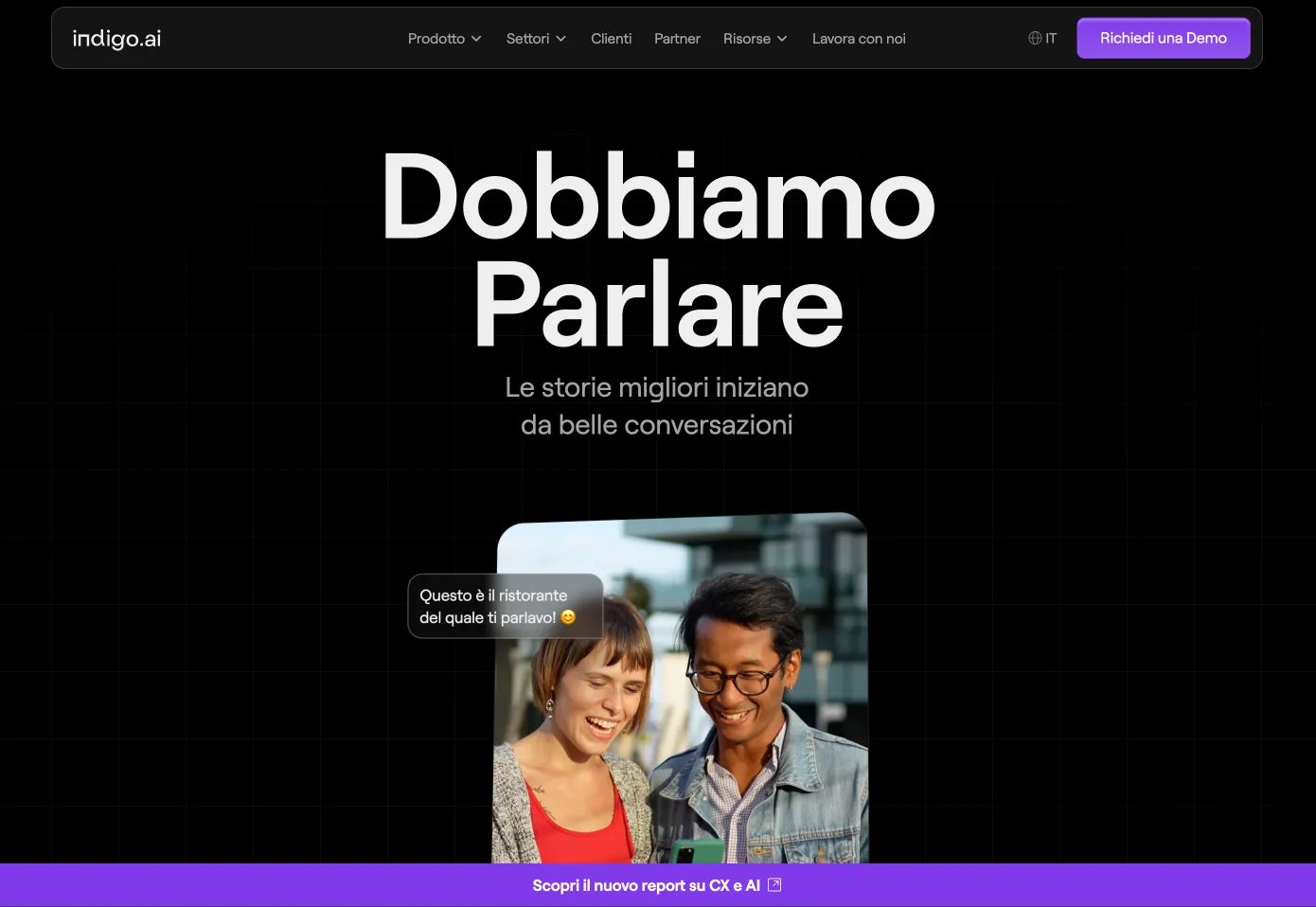
Indigo.ai is an Italian startup specializing in conversational AI, with a platform that allows creating AI agents integrated across multiple channels (chat, WhatsApp, phone, IVR). It has built experience in sectors such as utilities, finance, and retail, thanks to omnichannel capabilities, realistic synthetic voices, and the ability to scale rapidly to handle large call volumes.
4. Keplero AI
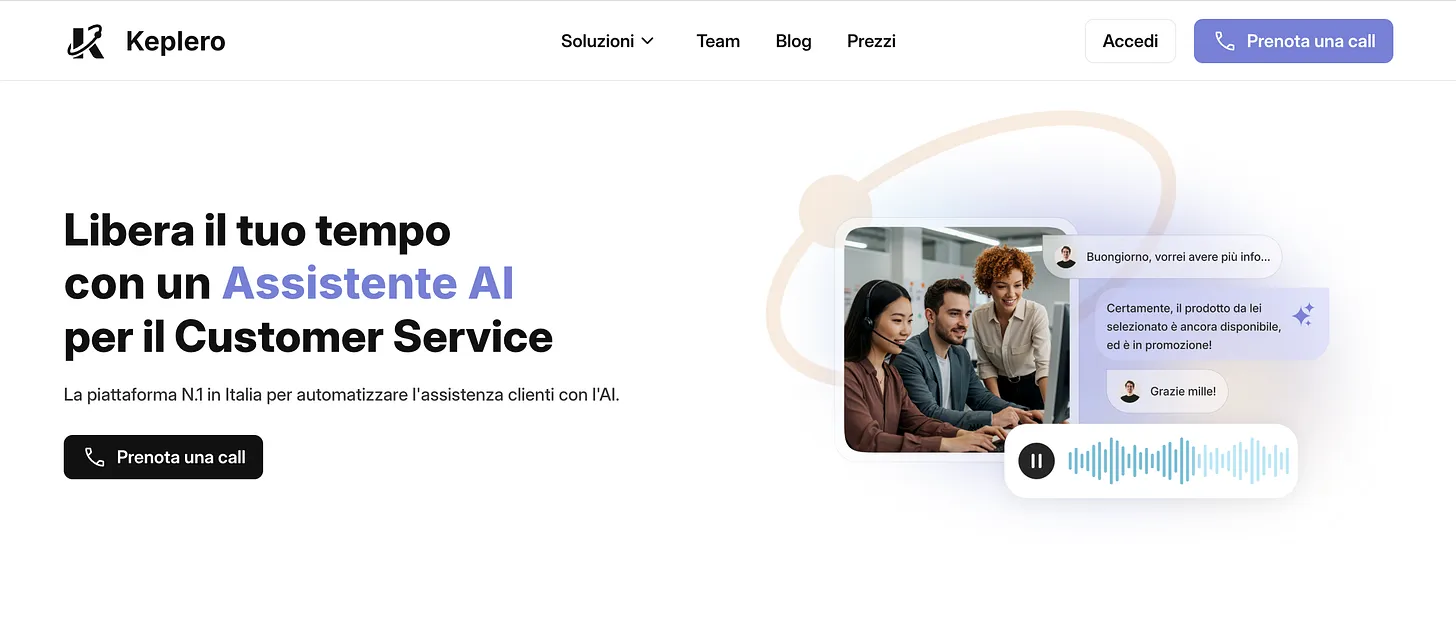
Keplero AI is an Italian deep-tech startup offering an AI-based virtual call center, specializing in phone call automation for customer service across various sectors including retail, fitness centers, and e-commerce. It is a customizable cloud-based solution that also offers call recording and reporting.
Innovating Without Changing Habits
Voicebots offer healthcare a concrete and easily implementable opportunity to immediately improve patient care and lighten the front-desk workload, without changing established habits: patients continue to call and staff remain central, but supported by a "digital colleague" that handles repetitive tasks. The result is a hybrid human-machine model: AI ensures efficiency and continuous availability, while people provide empathy and specialized expertise. In terms of experience, every voicebot reduces wait times and improves service clarity and continuity, but a solution built specifically for the healthcare sector can deliver an even more targeted and personalized service.